Custom Conference Tables
Custom Conference Tables: The Complete Guide (Sizes, Costs, and What to Expect)
Most conference tables are forgettable.
You've seen them — the laminate-topped, hollow-leg, ships-in-a-box furniture that wobbles when someone leans on it. It looks fine on a spec sheet. In person, it feels exactly like what it is: a cardboard table that's chintzy and floppy.
Here's the deal: the table your team gathers around says something. About the company. About leadership. About how much you value the time people spend together.
This guide covers everything you need to know about custom wood conference tables — what goes into them, what sizes are possible, and exactly what they cost. By the end, you'll know whether a custom table is right for your space and your team.
What Makes a Custom Conference Table Different
A commercial office table is a product. A custom conference table is a build.
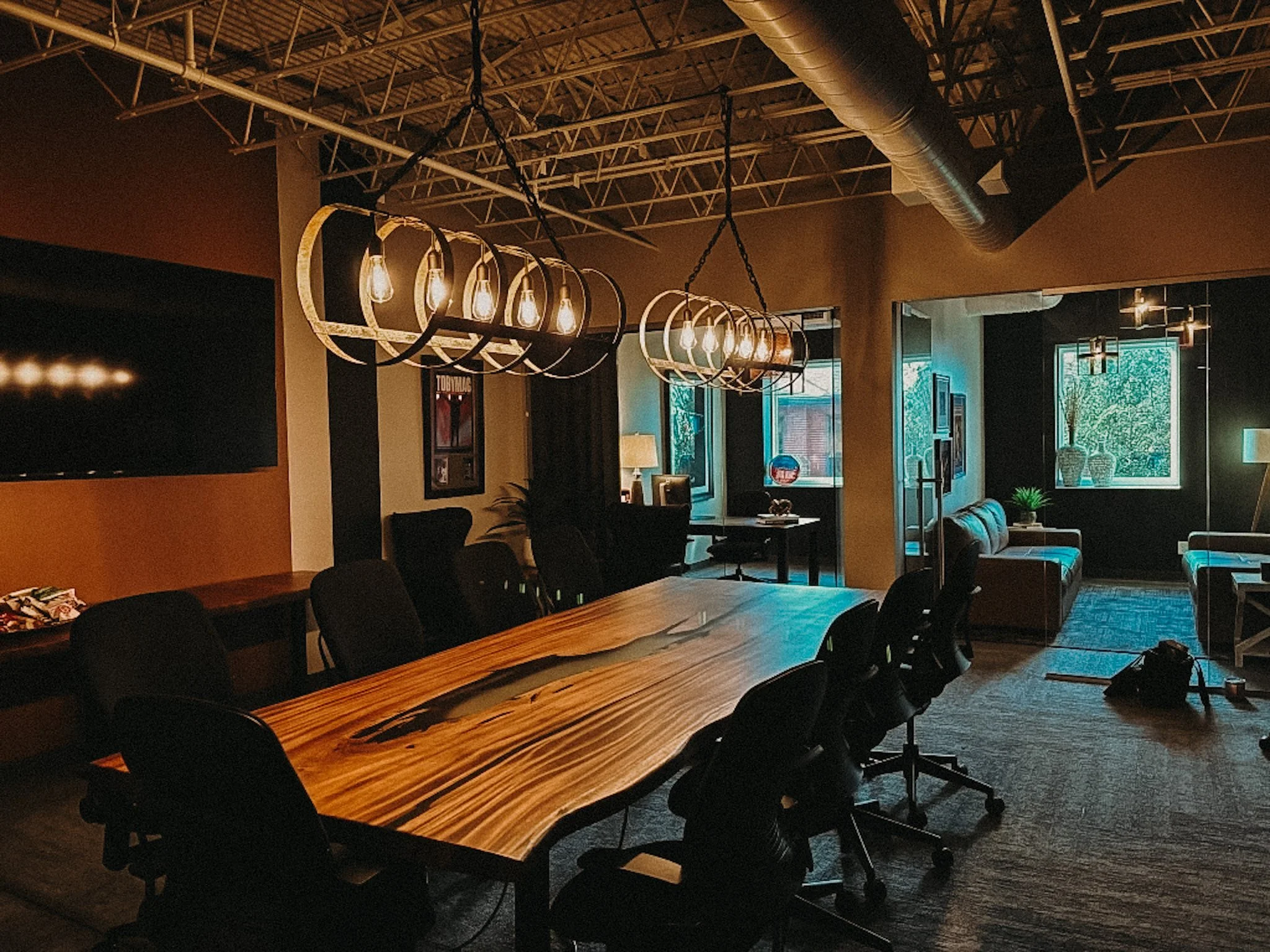
The difference starts with the slab. Every custom wood conference table begins with a single piece of live edge wood — chosen for its grain, character, and dimensions. No two slabs are identical. The table your company gets exists nowhere else on earth.
That matters more than it sounds. When your team sits down for a quarterly planning session or an all-hands, they're not sitting around a catalog item. They're sitting around something made specifically for them.
Here's what that actually looks like in practice:
Logo inlay. Your company logo can be inset directly into the wood using color-matched epoxy — not just branded, but matched to your exact brand colors. It's the kind of detail that makes visitors stop and ask about it.
Full tech integration. Power blocks, data ports, wire management, and grommet holes can all be built in. The table becomes what Donnie calls "a functional piece of art" — beautiful and completely wired for how your team actually works.
Custom base options. Metal and wood bases are built in-house. In rare cases, clients bring their own custom base to pair with the slab.
The result is a table that does two things at once: it anchors a room visually, and it runs your meeting without a tangle of extension cords in sight.
Built for Every Size and Shape
One question almost every client asks first: "Can you do our size?"
The answer is almost always yes.
Custom conference tables have been delivered for teams as small as 6 people and built to seat close to 100 at a single table. The largest single-piece table delivered measured 20 feet — shipped intact, no assembly required.
The largest request on record was 42 feet. That would require two pieces joined on-site, which is exactly how it would be handled.
Shape flexibility is just as wide. Standard rectangles, rounds, ovals, and fully irregular shapes are all on the table (pun intended). Some clients submit architect-style drawings — shapes designed to fit a specific wall angle or unusual room geometry. That's not unusual. It's actually one of the more interesting parts of the process.
If you have a space with a challenge, the build starts with a conversation about that challenge.
Why the Conference Table Matters More Now, Not Less
Remote work changed the math on office furniture.
Most teams don't gather in person every day anymore. When they do show up — for a strategy session, a client meeting, a company milestone — that moment carries more weight than it used to. It's rarer. Which makes it more significant.
The conference table is the place a distributed team physically comes together. It's the one piece of furniture in your office that the entire company experiences as a group.
A handmade table built to fit your space, branded with your identity, and wired for your workflow sends a clear signal: leadership respects the time this team spends in the same room.
That's not a small thing. Teams notice it. They take pride in it. There's a real morale dimension to sitting around a table that was built for your company specifically — not ordered from a furniture catalogue because it was in stock.
Now let's talk about the part most people want to get to: what it actually costs.
What Does a Custom Conference Table Cost?
Custom conference tables start at approximately $6,000.
The highest commissioned piece came in around $25,000.
That's a wide range, so here's what moves the number:
Size. A 10-foot table uses significantly more material than a 6-foot table. The slab itself is a major cost driver.
Slab selection. Some slabs are more rare, more figured, or more visually dramatic than others. Pricing reflects that.
Tech integration. Adding power blocks, data ports, and wire management adds both material and labor cost.
Base type. Metal bases involve fabrication; wood bases are built in-house. Both are available; the complexity varies.
Delivery method. Freight is the most common and cost-effective option. Personal delivery and white glove service are also available for clients who want the table handled with extra care from shop to installation.
Lead time is approximately 8 weeks from confirmed order to delivery.
For context: a commercial laminate table for a 12-person room might run $800–$2,000. It will also flex when someone leans on it, look dated within 3 years, and communicate nothing. A custom wood table built to your spec lasts decades and becomes part of how your company tells its story.
That's the real comparison.
Delivery and Installation
Getting a 16-foot slab from a woodshop into a 4th-floor conference room takes coordination.
All three delivery options — freight, personal delivery, and white glove service — are available. For most clients, freight is the right call: reliable, cost-effective, and handles large-format pieces without issue.
For buildings with tight elevators, unusual access, or clients who want zero-stress installation, white glove service is available. Building coordination is handled as part of the process — you don't have to figure out the logistics yourself.
The goal is for the table to arrive the way it left the shop: intact, protected, and ready to anchor the room it was built for.
Is a Custom Conference Table Right for You?
Here's a simple way to think about it.
If your team gathers in person — even occasionally — you have a conference table. The question is whether that table reflects the work happening around it.
Custom wood conference tables are built for companies that want the room to say something before the meeting starts. They work for 6-person startups and 100-person organizations. They ship nationwide.
If you're ready to see what's possible for your space, the conversation starts with your room dimensions and what you're envisioning. Everything else gets figured out from there.
Frequently Asked Questions About Custom Conference Tables
1. How much does a custom conference table cost?
Custom conference tables start at approximately $6,000 and can reach $25,000 or more depending on size, slab selection, tech integration, and base type. Most clients land somewhere in the middle of that range. The best way to get an accurate number is to share your room dimensions and what you're envisioning — we can give you a realistic estimate from there.
2. How long does it take to get a custom conference table?
Lead time is approximately 8 weeks from confirmed order to delivery. That includes slab selection, building, finishing, and shipping coordination. If you have a hard deadline — a grand opening, a client event, a move-in date — let us know upfront so we can plan accordingly.
3. What sizes are available?
Virtually any size is possible. We've built tables for teams as small as 6 and as large as nearly 100. The largest single-piece table we've delivered was 20 feet. Requests up to 42 feet have come in — those require two pieces joined on-site, which we handle. If you have a size in mind, the answer is almost always yes.
4. Can you build a table to fit my exact room dimensions?
Yes — that's one of the core advantages of going custom. Whether your room has an unusual footprint, angled walls, or tight clearances, we build to your specs. Some clients send architect drawings. Others walk us through the space on a call. Either way, we figure it out together.
5. What wood species are available?
We work with a wide range of domestic and exotic hardwoods, including walnut, maple, oak, ash, cherry, and more. Each slab is unique — different grain patterns, figure, and character. We'll walk you through what's available and help you choose a slab that fits the look and feel you're going for.
6. What is a live edge table?
A live edge table preserves the natural edge of the wood slab — the irregular, organic outline where the tree's bark once was. Instead of cutting the wood into a perfectly straight edge, we keep its natural shape. No two live edge tables look the same, which is exactly the point.
7. Can you add our company logo to the table?
Yes. Your logo can be inset directly into the wood surface using color-matched epoxy. We match your exact brand colors. It's one of the most popular customizations we do — visitors always notice it, and it makes the table unmistakably yours.
8. Can the table include built-in power and data ports?
Absolutely. Power blocks, USB ports, data ports, wire management channels, and grommet holes can all be built into the table. We design the integration so everything is clean and accessible — no extension cords running across the floor, no tangled cables under the table.
9. What base options are available?
We build both metal and wood bases in-house. Metal bases can be fabricated in a range of styles — from simple trestle legs to more architectural designs. Wood bases offer a warmer, more organic look. In some cases, clients bring their own custom base to pair with one of our slabs. We'll discuss what makes sense for your table during the design process.
10. Do you ship nationwide?
Yes. We ship custom conference tables across the country. Freight is the most common delivery method for large pieces and handles them reliably. We also offer personal delivery and white glove service for clients who want a higher level of care from shop to installation.
11. What is white glove delivery?
White glove delivery means we handle everything — careful packing, transport, building coordination, and installation. We manage the logistics so you don't have to. It's the right choice for buildings with tight elevators, complex access, or clients who simply want the process to be completely hands-off.
12. Can a large table fit in an elevator or up a stairwell?
This comes up often, and it's something we plan for. We assess building access as part of the delivery coordination process. If a table is too large for standard access, we work with building management to find a solution — sometimes that means rigging or staging the delivery in sections. We've handled it before and we'll handle it for you.
13. How is the table protected during shipping?
Every table is carefully packed before it leaves the shop. We use custom crating, protective wrapping, and padding designed for large-format furniture. The goal is for the table to arrive exactly as it left — no dings, no scratches, no surprises.
14. What if my table is damaged during delivery?
It's rare, but if damage occurs in transit, we address it directly. Document the damage at delivery with photos and contact us immediately. We'll assess the situation and make it right — whether that means a repair, refinishing, or in extreme cases, a replacement.
15. Can I see the actual slab before the table is built?
Yes. We strongly encourage slab selection to be a collaborative process. We can share detailed photos, dimensions, and grain close-ups. For clients who want to see the wood in person before committing, we can arrange that as well. You should feel confident about the slab before we start building.
16. What shapes can you build?
Rectangles, squares, rounds, ovals, and custom irregular shapes are all possible. Some clients come to us with architect drawings of a shape designed to fit a specific room. Others describe what they're envisioning and we sketch it out together. Shape is rarely a limitation.
17. How many people can a custom conference table seat?
As few as 6 and as many as nearly 100, depending on length and configuration. A general rule of thumb is 24–30 inches of table length per person. We'll help you size the table correctly for your team once we know the room dimensions and expected headcount.
18. Can you build a round conference table?
Yes. Round tables are one of our most requested shapes, particularly for smaller executive conference rooms. They create a more collaborative, egalitarian seating arrangement — no head of the table, everyone faces each other. We can build round tables from solid slabs or bookmatched panels depending on the diameter.
19. What finish options are available?
We offer a range of finishes from matte to satin to semi-gloss, and can use oil-based, water-based, or hardwax oil finishes depending on the look and durability you need. We'll walk you through the tradeoffs — some finishes are easier to maintain, others offer a more natural feel. The finish is part of the design conversation.
20. How do I care for and maintain a wood conference table?
Day-to-day maintenance is simple — wipe with a damp cloth, avoid harsh chemical cleaners, and use coasters or pads under anything that might scratch. We'll send you specific care instructions based on the finish your table receives. Periodic conditioning with a wood-safe oil keeps the surface looking great for years.
21. Can the table surface be repaired if it gets scratched or damaged?
Yes, and this is one of the advantages of solid wood over laminate. Scratches, dings, and surface wear can be sanded and refinished. A solid wood table can be restored to near-original condition — sometimes better. A laminate table, once damaged, looks damaged forever.
22. How does a custom wood table compare to a commercial laminate table in terms of durability?
There's no comparison. A solid wood table built properly will last decades. Commercial laminate tables typically show wear within a few years — peeling edges, wobbling legs, faded surfaces. The upfront cost of a custom table is higher, but the lifespan and the statement it makes are in a completely different category.
23. Do you offer epoxy river tables?
Yes. Epoxy river tables — where colored or clear epoxy fills the natural void between two matched slabs — are one of our most visually striking options. The color of the epoxy can be customized, including matching your brand colors. It's a dramatic look that photographs beautifully and becomes a genuine conversation piece.
24. Can epoxy be color-matched to our brand colors?
Yes. Whether it's a logo inlay or an epoxy river, we can mix epoxy to match your exact brand colors using your Pantone or hex codes. It's one of the details that takes a beautiful table and makes it specifically, unmistakably yours.
25. What is the process from inquiry to delivery?
It starts with a conversation about your space, your team size, and what you're envisioning. From there we move into slab selection, design confirmation, and a build timeline. Once the order is confirmed, you're looking at approximately 8 weeks to delivery. We keep you updated throughout — you're not just placing an order and waiting in the dark.
26. Do you require a deposit?
Yes. Like most custom furniture makers, we require a deposit to begin work. The deposit covers material costs and reserves your place in the build schedule. We'll walk you through the payment structure when we confirm your order.
27. Can I make changes to my order after it's placed?
Changes are easiest in the early stages — before the slab has been cut or build has begun. Once we're mid-build, changes become more difficult and may affect the timeline and cost. We do our best to accommodate requests, but the cleaner the design decision is made upfront, the smoother the process goes.
28. Do you offer any warranty on your tables?
We stand behind our craftsmanship. If there's a defect in the build or finish under normal use, we'll address it. Wood is a natural material and will move slightly with changes in humidity and temperature — that's not a defect, it's the nature of the material. We'll explain what's normal and what's not when we deliver.
29. Can I provide my own slab or wood?
In some cases, yes. If you have a slab with personal or sentimental significance — a tree from your property, a piece of reclaimed wood — we're open to that conversation. We'll need to assess the material to make sure it's properly dried and structurally sound before committing to a build.
30. Can the table be disassembled for moving?
Depending on the base design, yes. Most bases can be detached from the slab, which makes moving significantly easier. If you know you may need to relocate the table in the future, mention it during the design phase and we'll factor that into how the base is built and attached.
31. What is the heaviest table you've built?
Large walnut slabs can get heavy — we've built tables in the 600–800 pound range. It's something we account for in delivery and installation planning, and it's also why we coordinate building access in advance. A heavy table is a sign of real, dense, quality wood — not a problem, just something to plan for.
32. Do you build tables for home offices as well as commercial spaces?
Absolutely. While many of our conference table clients are businesses, a significant number are homeowners building out dedicated home office or meeting spaces. The same customization options apply. A custom table in a home office is a genuine investment in your workspace.
33. Can you match an existing piece of furniture in the room?
We'll do our best. If you have an existing wood piece — a credenza, shelving, flooring — share photos and details. We can select a slab and finish that complement what's already in the room. An exact match to a different maker's piece isn't always possible, but a harmonious result almost always is.
34. Do you make conference tables for unusual or non-rectangular rooms?
Yes — and we enjoy those projects. Unusual room geometry is exactly where custom furniture earns its keep. A table shaped to fit an angled alcove or a curved wall does something a stock table simply cannot do. If you've got an odd room, bring us in early.
35. Are your tables ADA compliant?
ADA compliance for conference tables typically involves clearance height (at least 27 inches underneath) and knee clearance depth. We can build to those specifications. If ADA compliance is a requirement for your space, let us know upfront and we'll design accordingly.
36. What type of metal do you use for metal bases?
We work primarily with steel — both raw and powder-coated. Powder coating allows us to finish the base in virtually any color, including black, white, and custom colors to match your brand or interior. Raw steel with a clear coat is also an option for a more industrial look.
37. Can the base be powder-coated to a specific color?
Yes. Powder coating is durable, consistent, and available in a very wide range of colors. If you have a specific color in mind — even a brand color — we can match it. Share your Pantone reference and we'll get it dialed in.
38. How do I measure my conference room to determine the right table size?
Measure the length and width of the room, then subtract at least 4 feet from each dimension for chair clearance and traffic flow. That gives you the maximum footprint your table should occupy. We can walk you through this on a call if you'd like a second opinion before committing to dimensions.
39. What's the difference between bookmatched and single slab tables?
A single slab table is cut from one continuous piece of wood. A bookmatched table uses two slabs cut sequentially from the same log and opened like a book — the grain mirrors itself across the center seam, creating a symmetrical, often dramatic effect. Bookmatching is common for wider tables where a single slab of the required width isn't available.
40. How wide can a conference table be?
Standard conference table widths run from 42 to 54 inches. Wider slabs exist but become increasingly rare and expensive. For tables requiring more width, bookmatching two slabs is the most common solution. We'll discuss what's realistic and available when we talk through your dimensions.
41. Do you build standing height or adjustable height conference tables?
Standing height tables (typically 42–44 inches) are something we can build. Full motorized sit-stand mechanisms for tables this large are less common and significantly more complex, but we're happy to discuss what's possible if that's a requirement. Most clients building custom conference tables are working with standard seated height.
42. Can you add a glass top over the wood surface?
It's possible, though most clients who invest in a custom wood table prefer to keep the wood surface visible and tactile — adding glass removes much of what makes the table special. If protection is the concern, a high-quality finish provides significant durability without covering the wood. That said, if glass is what you want, we can accommodate it.
43. Do you offer CAD drawings or renderings before the build begins?
We can provide sketches and dimensional drawings to help you visualize the table before we begin. Photo-realistic 3D renderings are possible for more complex builds. This is something to discuss during the design phase — we want you to feel fully confident before any wood is cut.
44. What happens if the slab we select isn't available by the time we're ready to order?
Slabs are one-of-a-kind, and availability can change. If a slab you've identified is no longer available, we'll work with you to find a comparable alternative. The best way to avoid this is to move from inquiry to confirmed order without too long a gap — if a slab speaks to you, it makes sense to move on it.
45. Can you build a conference table with storage or drawers?
Integrated storage in a conference table is uncommon but not impossible. More typically, clients address storage through credenzas or sideboards built to complement the table. If built-in storage is something you're interested in, let's talk through what that would look like for your specific use case.
46. Do you build matching furniture — credenzas, side tables, reception desks?
Yes. Many clients who commission a conference table come back for additional pieces — a matching credenza, a reception desk, a media console. Working from the same species and finish creates a cohesive look throughout the space. We're happy to plan a full room or build a single statement piece.
47. Can I visit your shop to see work in progress or available slabs?
Yes — visiting the shop is one of the best ways to get a feel for the work and to see slabs in person. Seeing the wood in natural light, running your hand across the grain, understanding the scale — none of that comes through in photos. If you're able to come in, we'd love to have you.
48. Do you work with interior designers and architects?
Frequently. Interior designers and architects often bring us in on commercial fit-out projects where they need a custom furniture maker who can hit a spec and a deadline. We're comfortable working from drawings, communicating with project teams, and coordinating delivery with general contractors. Trade inquiries are welcome.
49. What information do I need to get a quote?
The basics are: your room dimensions, how many people the table needs to seat, any shape preferences, and whether you're interested in tech integration or a logo inlay. The more context you can give us — photos of the space, inspiration images, your timeline — the more accurate and useful our initial estimate will be.
50. How do I get started?
Just reach out and tell us about your space. Share your room dimensions, your team size, and whatever vision you have — even if it's rough. We'll take it from there, walk you through what's possible, and help you build something your team will sit around for decades.

Sawdust & Whiskey is a family-run workshop based in Nashville, TN—built on craftsmanship, trust, and the belief that the best pieces, like a well-aged whiskey, take time.

Meet the Team
-
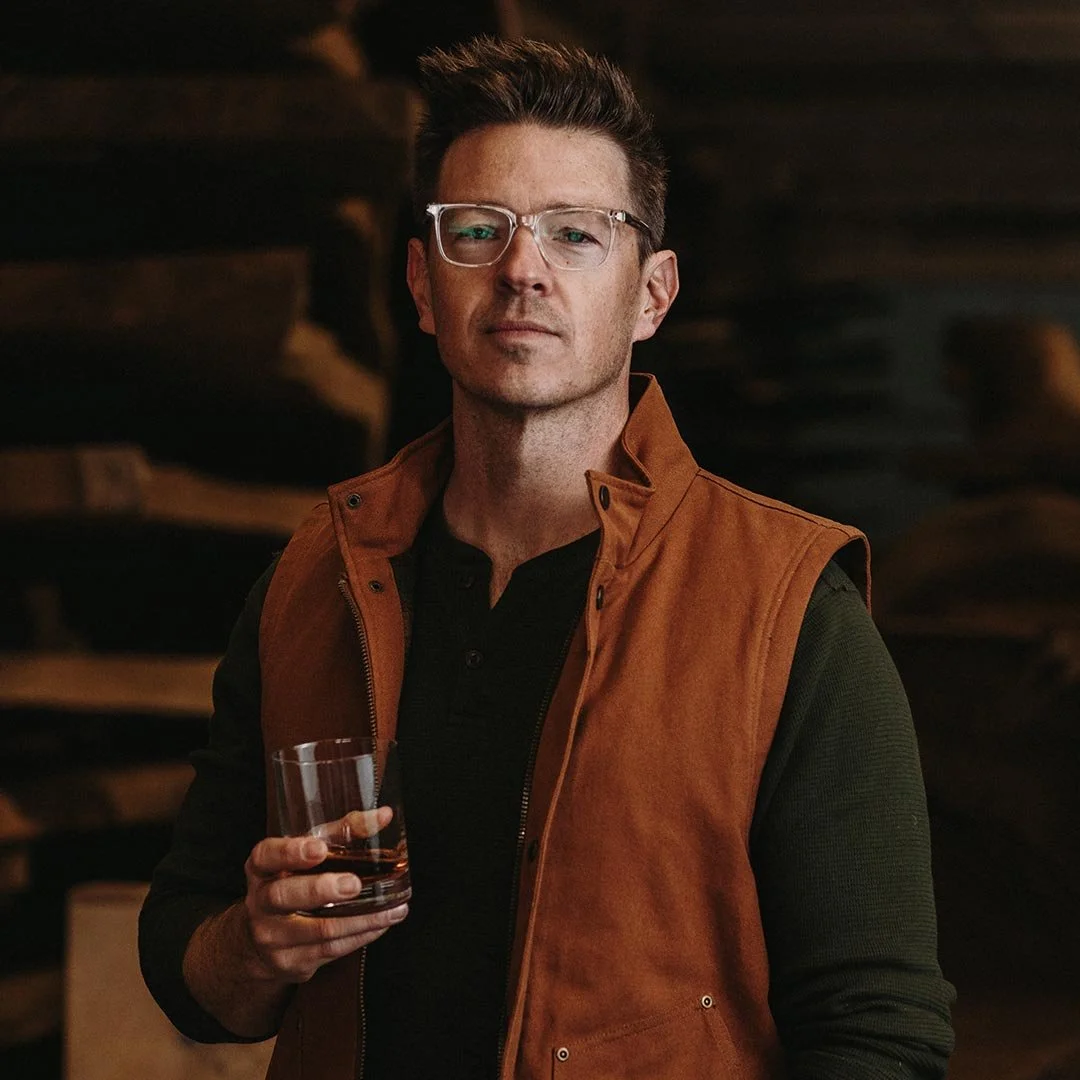
![A man in glasses holding a glass of whiskey, standing in front of a dark wooden background, wearing a brown vest over a black shirt.]()
Donny Fallgatter
Founder & Craftsman
-
![A woman with long dark hair smiling and holding a glass of wine indoors.]()
Casey Fallgatter
Founder & Social Media Manager
-
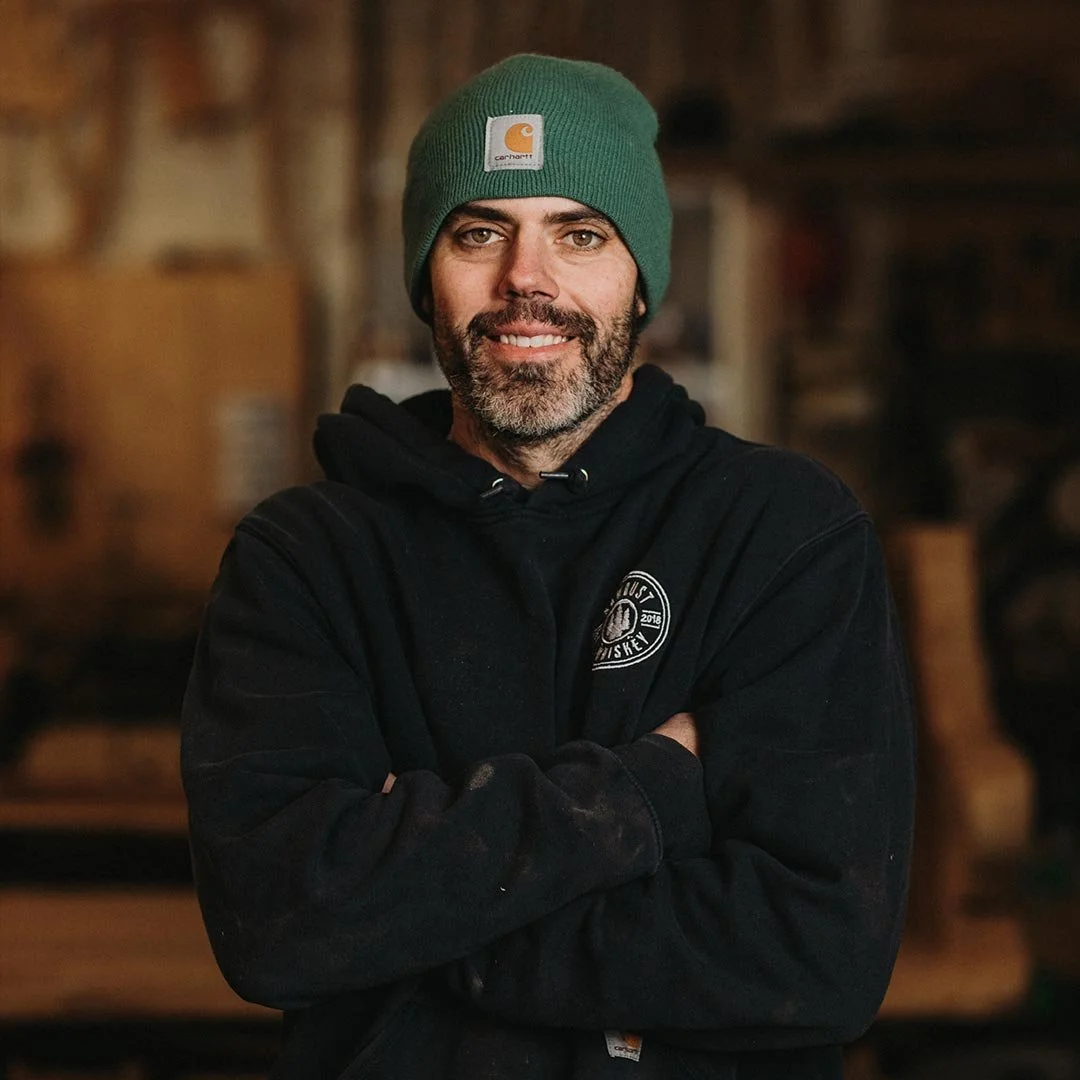
![A man wearing a green beanie and a black hoodie, standing with arms crossed in a warmly lit wooden interior.]()
Ted Burnley
Shop Foreman
-
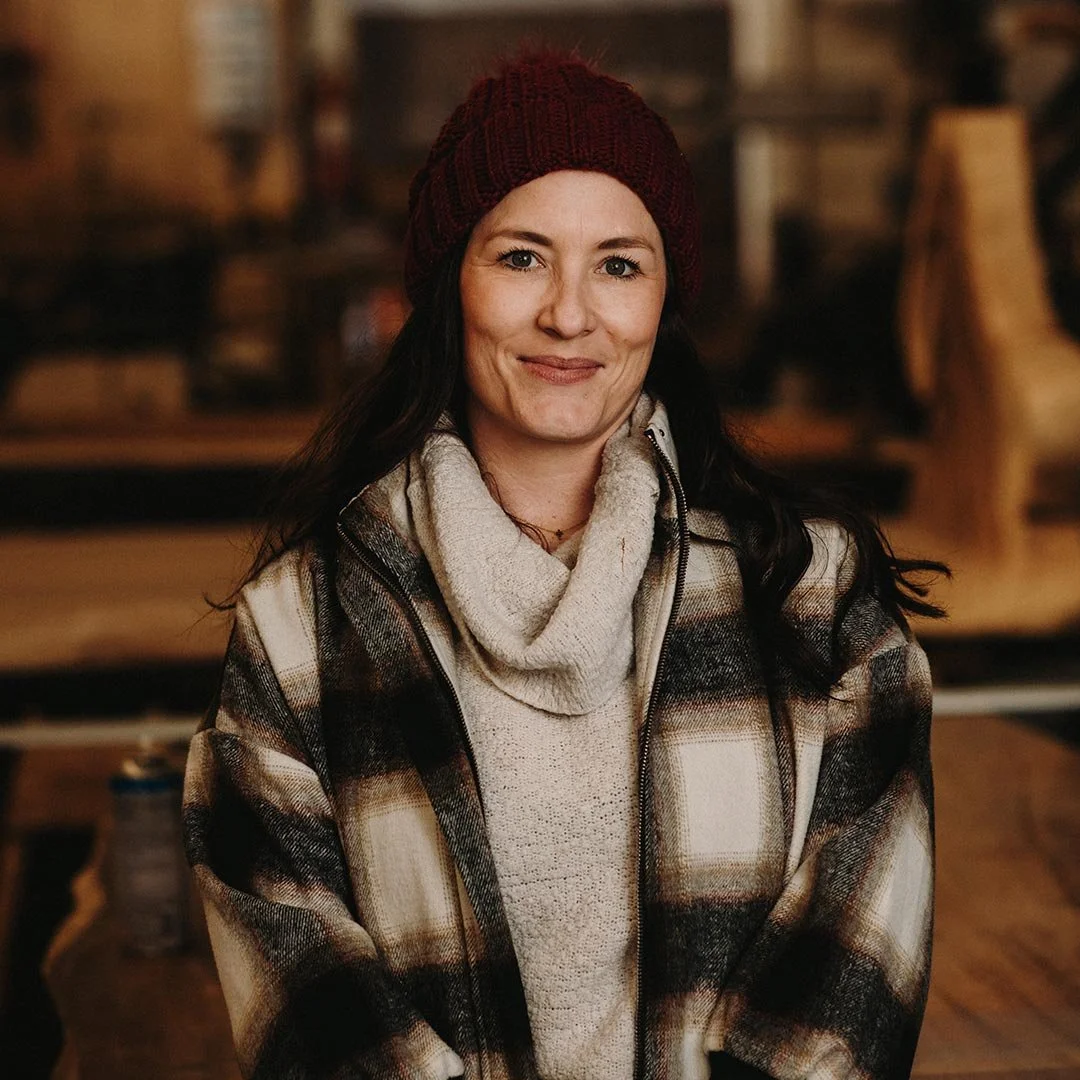
![A woman with long dark hair wearing a red knit beanie, a cream turtleneck sweater, and a plaid jacket smiling in a cozy, rustic indoor setting.]()
McKenna Hydrick
Marketing & Brand Creative