Custom Crosscut Tabletops
Custom Crosscut Tabletops: Everything You Need to Know Before You Buy
What Is a Crosscut Tabletop?
Most wood slabs are cut lengthwise — along the grain, parallel to the log's height. That's the standard live edge slab you've seen a hundred times.
A crosscut is the opposite.
The saw goes across the trunk — perpendicular to the length of the log. The result is a full cross-section of the tree: every growth ring exposed, the complete natural shape of the trunk preserved.
No two are identical. Because the cut follows the actual contour of the tree, the finished piece is organically round — not machined into a circle, but shaped exactly as the tree grew.
How It Differs from a Standard Live Edge Slab
Here's the key visual difference:
Standard live edge slab: Sapwood (the lighter outer wood) appears only on the live edge sides — typically two edges of a rectangular piece.
Crosscut tabletop: Sapwood is visible all the way around the perimeter — because you're looking at the entire cross-section of the trunk.
Grain pattern: Instead of lengthwise lines running the length of a table, you get concentric rings radiating outward from the center.
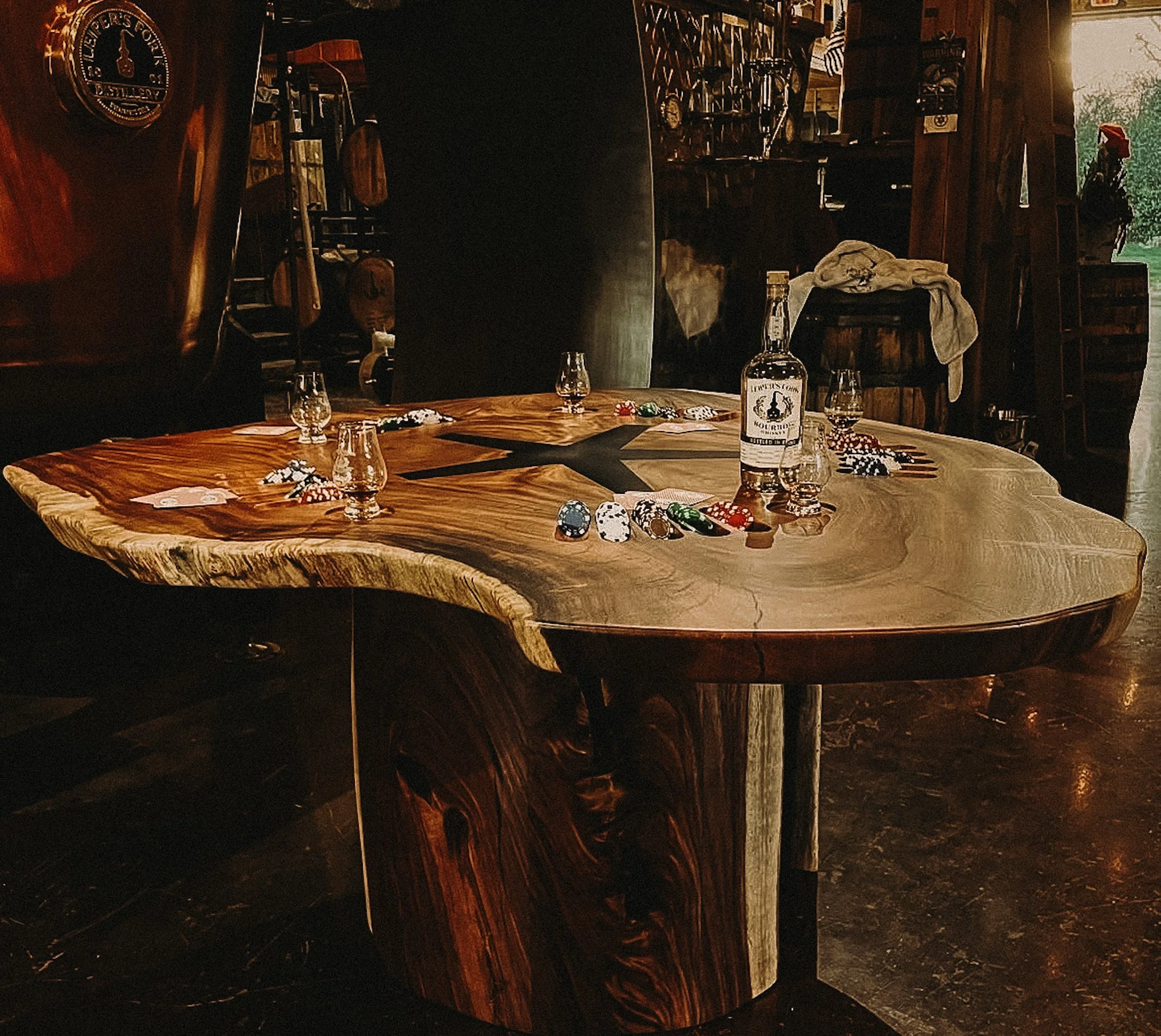
The effect is dramatic. It reads more like a work of art than a piece of furniture — until you put a drink on it and realize it's also built to handle anything you throw at it.
The Build Process: What Goes Into a Crosscut Table
Crosscut tabletops are harder to produce than standard slabs. That's not marketing language — it's an honest acknowledgment of what the process requires.
- Cut at approximately 4 inches thick. Crosscut pieces are kept thicker than flat-sawn slabs. That extra thickness is intentional — it accounts for movement during the kiln drying process.
- Kiln dry the slab. Every piece goes through kiln drying to stabilize the wood. With crosscuts, the slab will shift and move during this phase. That's expected. That's why the extra thickness matters.
- Resurface after kilning. Once the slab comes out of the kiln, it has to be resurfaced to restore a flat plane. This step is not optional. It's mandatory — and it's what separates a functional table from a warped slab of wood.
- Fill voids and holes with epoxy. Crosscut pieces are cut from the natural interior of the tree. That means natural voids and holes are part of the material. Each one gets filled with epoxy — not for looks, but to create a flat, usable surface. A nice table has to be functional first.
- Apply a penetrating epoxy soak. End grain absorbs finish more aggressively than face grain. If you skip this step, the finish won't cure evenly. The penetrating epoxy soak saturates the surface, then gets sanded back before the final finishing process begins.
- Sand to 220 grit. The sanding process on a crosscut is more physically demanding than on a flat-sawn slab. The vertical fiber orientation of end grain resists the sander differently. It takes longer. It takes more passes. It's not glamorous — but it's what gives the surface its final character.
- Apply customer's chosen finish. The last step belongs to the customer. Oil, wax, conversion varnish — the choice depends on the application and the look they want.
Why End Grain Makes These Tables Exceptionally Durable
Here's something most people don't realize: end grain is harder than face grain.
When you cut across a log, the wood fibers run vertically — standing on end like the bristles of a brush. Those fibers are more compressed, more dense, and more resistant to surface damage than fibers cut lengthwise.
This is the same principle used in butcher block construction. A butcher block countertop is end grain by design — because it needs to absorb years of knife cuts, heavy pounding, and constant use without failing.
Crosscut tabletops carry that same structural advantage.
The proof is in where these pieces end up. Sawdust and Whiskey crosscut tables have been installed in hotel poker rooms — environments where surfaces face sustained heavy use, constant contact, chip and drink spills, and years of daily wear. They hold up.
The Guanacaste Advantage
Not every species works well in crosscut form. The visual impact depends heavily on how a wood's grain, color, and natural character translate to a cross-section view.
Donnie's preferred species for crosscut work is Guanacaste — a large-canopy tropical hardwood sourced from Indonesia.
Here's why it works: Guanacaste grows wide. The trunk diameter supports large-format crosscuts that simply aren't possible with smaller domestic species. The grain pattern is pronounced. The natural color variation between heartwood and sapwood creates strong visual contrast that becomes the centerpiece of the finished piece.
In a flat-sawn slab, Guanacaste is impressive. In crosscut form, it's something else entirely.
Scale That Has to Be Seen to Be Believed
The most common reaction when someone sees a large crosscut tabletop for the first time isn't "beautiful." It's "wait — that's one piece?"
Donnie recently completed the largest crosscut in the shop's history: an 8-foot diameter single solid piece, sold to a client in Texas.
Eight feet. One piece of wood.
Most dining tables max out around 40 inches wide. This piece is more than twice that — and it came from a single tree trunk, not laminated sections, not a composite, not a veneer. One tree. One cut.
When a piece like that lands in a space, it becomes the room. Everything else is just furniture.
What Does a Crosscut Tabletop Cost?
Here's the honest answer: crosscut tabletops start at approximately $4,000 and run up to $15,000 on the high end.
That's a wide range — and the variables that move the number are real: species, diameter, thickness, void complexity, finish selection, and the labor hours required for a piece that's genuinely harder to produce than a standard slab.
What you're paying for isn't just wood. You're paying for the process — the kiln work, the resurfacing, the epoxy work, the extra sanding hours that end grain demands, and the decades of craft knowledge behind every decision.
Custom furniture at this level isn't a commodity. It's a made-to-order object built to last a lifetime — and in most cases, to outlast the room it goes in.
For context: a well-made crosscut tabletop from a quality craftsman will still be in service 30, 40, or 50 years from now. The math on that investment looks different when you think about it that way.
Ready to See What's Possible?
Every piece Donnie builds starts with a conversation about your space, your wood preferences, and how you use your kitchen. There's no catalog. No standard sizes. No guessing.
If you're ready to talk through your project, contact Sawdust & Whiskey for a custom project estimate — or browse his countertop work to see what a custom wood slab looks like when it's done right.
Frequently Asked Questions about Crosscut Tabletops
What is a crosscut tabletop?
A crosscut tabletop is made by cutting a tree trunk perpendicular to its length — across the grain rather than along it. The result is a full cross-section of the tree, with every growth ring, the natural shape of the trunk, and the contrast between heartwood and sapwood all visible at once. No two pieces are the same.
How is a crosscut tabletop different from a live edge slab?
A live edge slab is cut lengthwise along the log, with the raw natural edge preserved on one or two sides. A crosscut shows the entire trunk face — sapwood wraps all the way around the perimeter, and the grain radiates outward in concentric rings from the center rather than running in parallel lines.
What species of wood do you use for crosscut tabletops?
We primarily work with Guanacaste, a large-canopy tropical hardwood. Its wide trunk diameter makes it ideal for large-format crosscuts, and the contrast between its heartwood and sapwood creates a dramatic, distinctive look that's hard to match with most domestic species.
How large can a crosscut tabletop be?
That depends on the tree. We've completed crosscuts up to 8 feet in diameter from a single solid piece. Most pieces fall in the 3- to 6-foot range. The maximum size is determined by the trunk we're working with — we don't laminate sections together to fake a larger diameter.
How much does a crosscut tabletop cost?
Crosscut tabletops start at approximately $4,000 and can reach $15,000 or more on the high end. The price varies based on species, diameter, thickness, the complexity of natural voids, finish selection, and the labor hours required. We're happy to give you a specific quote once we know what you're looking for.
Why are crosscut tabletops more expensive than standard slabs?
The production process is genuinely more involved. Crosscuts require extra thickness at the initial cut, kiln drying followed by resurfacing, void filling with epoxy, a penetrating epoxy soak specific to end grain, and significantly more sanding time. The material and labor costs are higher at every stage compared to a flat-sawn slab.
How long does it take to make a crosscut tabletop?
From the initial cut to finished piece, the process typically takes several weeks to a few months depending on the size of the piece, kiln drying time, and current shop workload. We'll give you a realistic production timeline when you place your order.
Is a crosscut tabletop durable enough for everyday use?
Yes — and in some ways it's more durable than a standard slab. End grain wood is denser and harder than face grain. Our crosscut tables have been installed in hotel poker rooms and commercial settings where they see heavy daily use. They hold up exceptionally well over time.
What finish options are available?
We offer oil, wax, and conversion varnish finishes. Each has different characteristics in terms of appearance, maintenance requirements, and level of protection. We'll walk you through the options and help you choose the right finish for your environment and how the piece will be used.
Can I use a crosscut tabletop as a dining table?
Absolutely. The round or organic shape of a crosscut makes it a natural fit for a dining table. The durability of end grain means it can handle daily meals, spills, and years of use without showing excessive wear.
Can a crosscut tabletop be used as a kitchen island or countertop?
Yes. End grain is actually the traditional material for butcher block countertops precisely because of its durability. With the right finish and proper care, a crosscut countertop will perform well in a kitchen environment.
What is end grain and why does it matter?
End grain refers to the face of the wood exposed when you cut across the trunk rather than along it. The wood fibers run vertically — like the bristles of a brush — making the surface denser, harder, and more resistant to damage than the face grain you see on a standard slab.
Will my crosscut tabletop be perfectly round?
Not machined-round, no — and that's part of what makes it special. The shape follows the natural contour of the tree trunk. It will be organically round, which means it has its own character and slight asymmetry. If you want a perfectly geometric circle, that's not what a crosscut is.
What are the dark lines or irregular marks I see in the wood?
Those are part of the tree's natural history — stress lines, mineral deposits, healed injuries, or variations in how the tree grew over time. They're not defects. They're what makes each piece a record of that specific tree's life.
What is the epoxy used for in the build process?
Epoxy serves two purposes. First, natural voids and holes in the crosscut are filled with epoxy to create a flat, functional surface. Second, a penetrating epoxy soak is applied to the end grain before finishing — because end grain absorbs finish more aggressively than face grain, and this step ensures the final finish cures evenly.
Can I choose the color of the epoxy fill?
Yes. Clear epoxy is the most common choice since it lets the natural wood speak for itself, but we can work with tinted epoxy if you want the fills to be a design feature. We'll show you samples before committing.
Will the epoxy yellow over time?
We use high-quality, UV-resistant epoxy formulations. Some ambering can occur with any epoxy over many years, particularly with sun exposure, but it's minimal with the products we use. Keeping the piece out of direct prolonged sunlight will help preserve the clarity.
What is Guanacaste wood and where does it come from?
Guanacaste is a large tropical hardwood tree native to Central America and parts of South America. The material we work with is sourced from Indonesia, where it's grown in managed forestry operations. It's prized for its wide trunk, distinctive grain, and the strong visual contrast between its heartwood and sapwood.
Is Guanacaste a sustainable wood choice?
The Guanacaste we source comes from responsibly managed forestry operations. We're happy to discuss sourcing details with you if sustainability is an important factor in your decision.
How thick is a crosscut tabletop?
We cut crosscuts at approximately 4 inches thick to account for movement during kiln drying and the resurfacing process that follows. The finished thickness after kilning and resurfacing typically lands in the 2.5- to 3.5-inch range depending on how much movement occurred during drying.
Does the wood move or crack after it's in my home?
Wood is a natural material and will always respond to changes in humidity and temperature. The kiln drying process significantly reduces the risk of movement, but no wood piece is completely static. We recommend maintaining consistent indoor humidity — ideally between 35% and 55% — to minimize seasonal movement.
What humidity level should I maintain in my home?
We recommend keeping your indoor relative humidity between 35% and 55% year-round. Extreme swings — very dry winters or very humid summers — are harder on wood than a consistent moderate range. A whole-home humidifier or dehumidifier can help if your climate requires it.
Can crosscut tabletops be used outdoors?
We don't recommend it. Crosscut tabletops are designed for interior use. Outdoor exposure to moisture, UV, and temperature swings would cause significant movement and deterioration over time. If you need an outdoor piece, we'd point you toward a different product better suited for that environment.
How do I clean and maintain my crosscut tabletop?
For day-to-day cleaning, wipe with a damp cloth and dry immediately — don't let water sit on the surface. Avoid harsh chemical cleaners, bleach, and abrasive pads. Maintenance beyond that depends on your finish: oiled and waxed surfaces benefit from periodic reapplication, while conversion varnish requires less ongoing care.
How often does an oiled finish need to be reapplied?
It depends on use and environment, but generally once or twice a year for a dining surface. You'll notice the wood starting to look dry or dull when it needs attention. The process is straightforward — clean the surface, apply oil, let it penetrate, and wipe off the excess.
Can I use a crosscut tabletop as a desk or office surface?
Yes. A crosscut makes a striking desk or executive surface. For office use, we'd generally recommend a conversion varnish finish for its durability and resistance to spills, pencil marks, and daily contact.
What base or leg options work best with a crosscut tabletop?
That depends on your space and aesthetic. Hairpin legs, trestle bases, steel pedestals, and live edge wood bases all work well. The organic shape of a crosscut pairs particularly well with metal bases that let the wood be the visual centerpiece. We can help you think through options or work with your designer or fabricator.
Do you sell bases and legs as well, or just the tabletop?
We sell the tabletops. For bases and legs, we can make recommendations and refer you to fabricators we've worked with, but the base is typically sourced separately. Some clients work with their own designers or metal fabricators.
Can you ship a crosscut tabletop?
Yes, but freight shipping for a piece this size and weight requires careful crating and coordination with a white-glove freight service. We'll walk you through the logistics and cost when your piece is ready. The 8-foot piece we completed recently was shipped to Texas without issue.
How do I know what size is right for my space?
Start with the room and the number of people you need to seat or the function the piece will serve. For dining, allow roughly 24 inches of table edge per person. We're happy to help you think through sizing — send us your room dimensions and we'll give you an honest recommendation.
Can I see samples of the wood before ordering?
Yes. We can show you material samples and photos of past crosscut pieces. For a commission of this scale, we'd always encourage you to see examples in person or review a thorough photo library before committing.
Do you take custom orders?
Every crosscut tabletop we make is essentially a custom order — no two pieces are the same. We work with you on size range, species, finish, and void treatment to get to a result that fits your space and your vision.
What's the lead time for a custom crosscut tabletop?
Lead time varies based on material availability, kiln scheduling, and current shop workload. A realistic range is typically 8 to 16 weeks from deposit to completion. We'll give you a specific timeline when we begin the project.
Do you require a deposit?
Yes. We require a deposit to begin a custom commission. The deposit amount and payment structure will be outlined in your project agreement. Because each piece is made specifically for you, the deposit secures your place in the production schedule and covers material costs.
What happens if the finished piece looks different from what I expected?
We work to set clear expectations upfront through material samples, reference photos, and detailed conversations about what a crosscut looks like in reality. Natural wood will always have some variation from expectations — that's the nature of the material. We communicate proactively throughout the process so there are no surprises at delivery.
Can a crosscut tabletop be refinished if it gets damaged?
Yes. One of the long-term advantages of a solid wood piece at this thickness is that it can be sanded and refinished if the surface is ever significantly damaged. This is not possible with veneer or composite surfaces. It adds to the lifetime value of the investment.
Are crosscut tabletops food safe?
With the right finish, yes. If food safety is a priority — for a kitchen island or prep surface — we'll use a food-safe finish and ensure the epoxy used in void filling is also food-safe rated once cured. Let us know your intended use upfront so we can make the right finishing decisions.
How heavy is a crosscut tabletop?
Significantly heavier than a standard slab of similar footprint. A large crosscut at full thickness can weigh several hundred pounds. This is something to factor in when planning your base and installation. We'll give you an estimated weight for your specific piece.
Will my crosscut tabletop have a perfectly flat surface?
Yes — flatness is non-negotiable for us. The resurfacing step after kiln drying exists specifically to restore a true flat plane. Voids are filled with epoxy to eliminate any recesses. The final sanded surface will be flat and functional.
What does the sanding process involve?
End grain is physically harder to sand than face grain because of the vertical fiber orientation. We sand progressively up to 220 grit, which takes considerably more time and passes than sanding a standard flat-sawn slab. It's one of the reasons production time and cost are higher.
Can two crosscuts be joined to make a larger surface?
Technically possible, but it's not something we typically do. Part of what makes a crosscut special is that it's one piece — one tree. Joining two pieces changes the nature of what it is. If you need a very large surface, we'd rather find the right single piece than engineer a composite.
How do I protect my crosscut tabletop from heat damage?
Use trivets or heat pads for hot dishes and cookware. No wood finish is fully heat-proof, and direct contact with a hot pan can damage the surface regardless of how it was finished. This is standard practice for any quality wood table.
Will sunlight affect my crosscut tabletop?
Yes. UV exposure will gradually shift the color of the wood over time — some species darken, others lighten. Using window treatments to limit direct prolonged sun exposure will slow this process. It's natural and expected with any wood piece.
Can I put a glass top over my crosscut tabletop?
You can, but most of our clients choose not to — the whole point of a crosscut is the visual and tactile experience of the wood surface. If protection is the concern, the right finish often addresses it without covering up what you paid for.
How do I know if a crosscut tabletop is right for my space?
A crosscut works best when it can be a focal point. It's not a background piece of furniture — it commands attention. If your space has room for a strong visual anchor and you want something that generates conversation, a crosscut is worth serious consideration. If you need something that blends in, a standard slab may be a better fit.
What styles of interior design work well with a crosscut tabletop?
Crosscuts are versatile across a range of aesthetics. They work beautifully in rustic and organic interiors, but they also look striking in modern and industrial spaces where the natural form of the wood contrasts with clean lines and metal. The key is letting the piece be the statement it is rather than competing with it.
Is a crosscut tabletop a good investment?
We believe so — and we're not just saying that. A well-made crosscut tabletop from quality material will still be in service 30, 40, or 50 years from now. When you divide the cost over that lifespan, it compares favorably to furniture that needs replacing every decade. You're also buying something that holds meaningful aesthetic and material value over time.
How do I get started with an order?
Reach out to us directly. We'll start with a conversation about your space, your intended use, your size range, and your budget. From there we'll talk through material and finish options and give you a project quote. There's no pressure — we'd rather you have all the information you need to make a confident decision.
Do you have examples of past crosscut tabletops I can see?
Yes. We have an ongoing portfolio of completed pieces including the 8-foot diameter Guanacaste crosscut shipped to Texas. We're happy to share photos and connect you with past clients who can speak to the experience of owning one of these pieces firsthand.

Sawdust & Whiskey is a family-run workshop based in Nashville, TN—built on craftsmanship, trust, and the belief that the best pieces, like a well-aged whiskey, take time.

Meet the Team
-
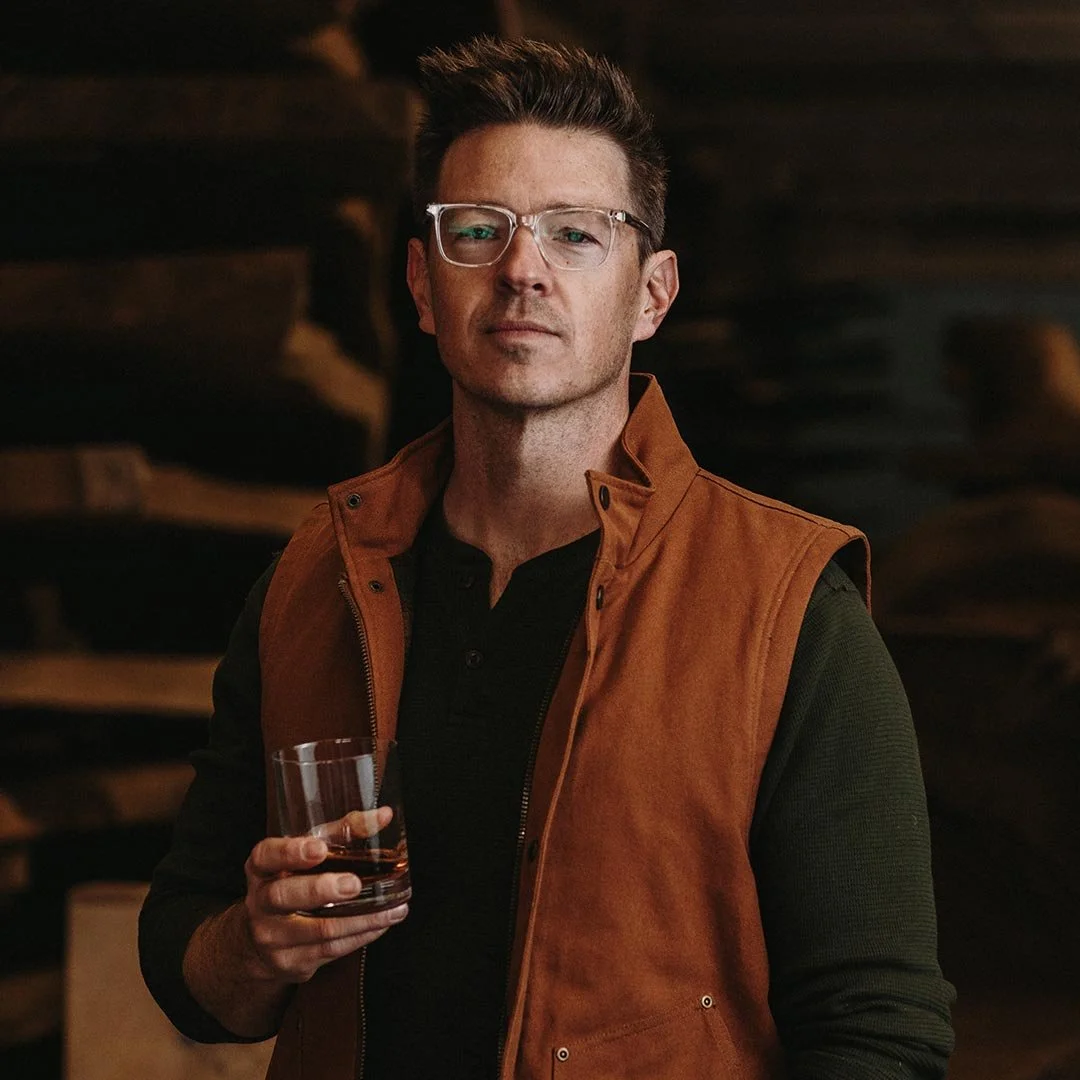
![A man in glasses holding a glass of whiskey, standing in front of a dark wooden background, wearing a brown vest over a black shirt.]()
Donny Fallgatter
Founder & Craftsman
-
![A woman with long dark hair smiling and holding a glass of wine indoors.]()
Casey Fallgatter
Founder & Social Media Manager
-
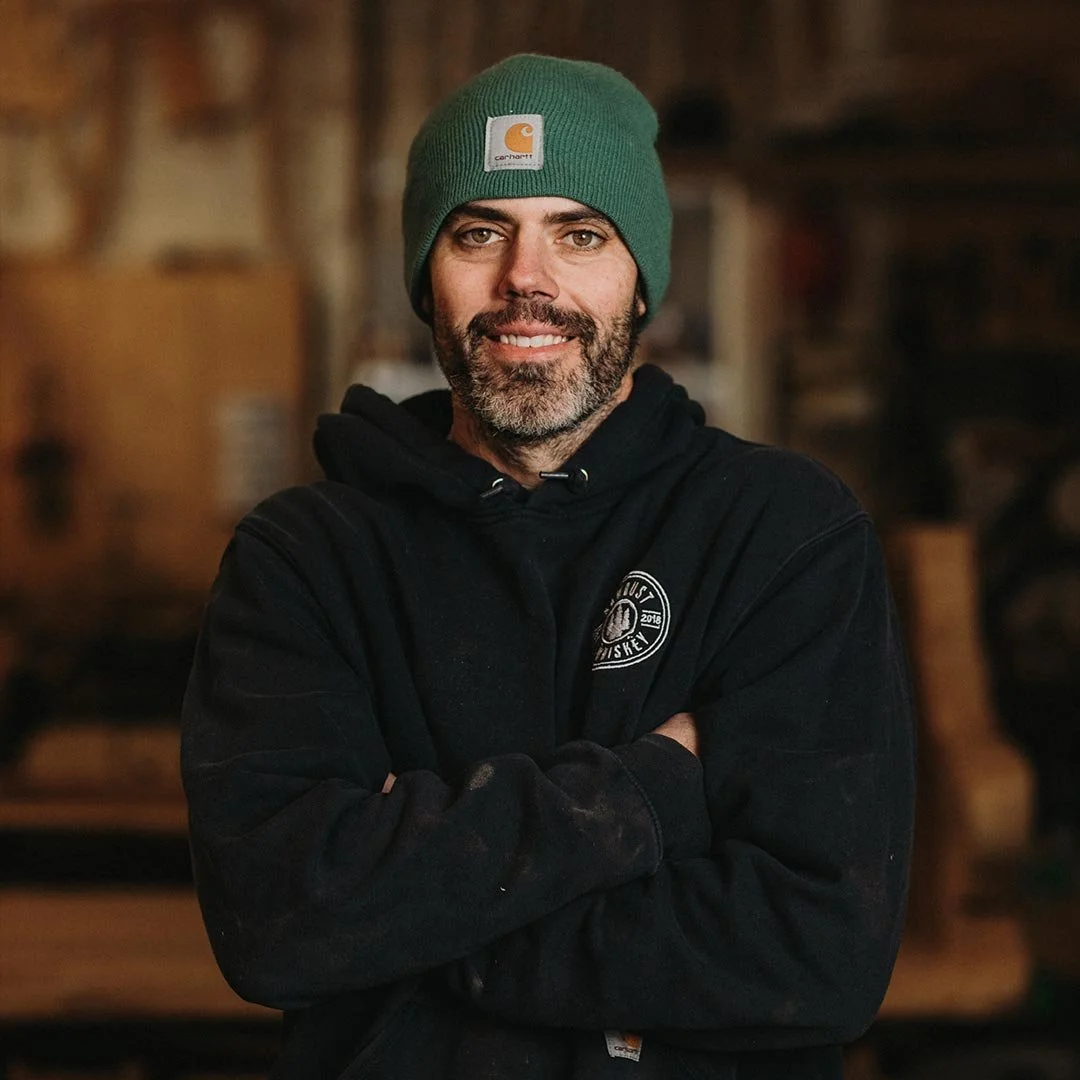
![A man wearing a green beanie and a black hoodie, standing with arms crossed in a warmly lit wooden interior.]()
Ted Burnley
Shop Foreman
-
![A woman with long dark hair wearing a red knit beanie, a cream turtleneck sweater, and a plaid jacket smiling in a cozy, rustic indoor setting.]()
McKenna Hydrick
Marketing & Brand Creative